


Frauen I Winzerinnen in der Champagne
Hello dear Champagne community,
It’s great to have you back. We have just returned from our most important fair of the year, the Printemps des Champagnes. We tasted over 500 Champagnes and updated our list of new talents in the process. Several new names have been added again!
This year’s Bulles Bio was particularly promising – the major showcase of organic winegrowers. Around 75 producers were represented, of which we managed to visit roughly two-thirds. And that was just one of six salons on that day :)
A few years ago, many of the exhibiting producers were still somewhat rough around the edges, and there were quite a few faulty wines among them. This time, almost everything we tasted was impeccably clean, and the overall quality had improved enormously.
It is also interesting to see that many exhibitors are not yet 100% organic, but are in transition – for example, having converted 2 hectares while another 4–6 hectares are still farmed conventionally. In the Champagne region, achieving full certification takes an extremely long time, since even all reserve wines from previous years must also come from organic viticulture.
Because Bulles Bio also allows producers who are only partially converted, it becomes possible to discover many winemakers who are just at the beginning of their journey towards full certification.
It is also great to see that we are increasingly being asked by winemakers how we assess the current state and trends in Champagne. It feels very rewarding that our perspective is valued in this way – and it motivates us to always go the extra mile.
On a slightly more sobering note, we observed developments regarding the presence of women in Champagne. In many places, the representatives presenting the wines are still predominantly male, and the leadership of the groups exhibiting at Printemps des Champagnes is still firmly in male hands.
At one evening event we were invited to, a young influencer received an award. Her appearance – especially her outfit – stood in stark contrast to the values the group publicly communicates, which we found unsettling. When we spoke with female representatives of the group, we learned that they had no influence over such decisions and considered the presentation itself regrettable or even embarrassing.
We mention this because there is often a perception that “this is no longer an issue” and that such patriarchal structures have largely disappeared in Western countries. We also addressed this directly with some of the winemakers we work with, stating that we find it problematic. This initially led to quite surprised reactions :)
However, it is important to speak openly about it, and we remain in very good dialogue with the producers – it has not damaged our relationships.
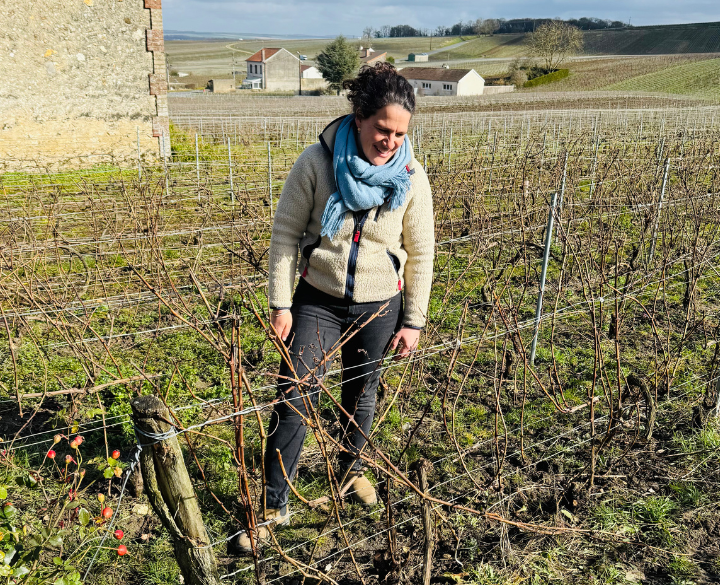
Because we became more aware of this issue through this experience, we have now decided to place even stronger emphasis on highlighting and supporting female winemakers. They are among the best oenologists the wine world has to offer, but they are often less outspoken and less present in the spotlight.
You can find our dedicated section for female winemakers [HERE] (a category we have always maintained), and we are working on focusing even more on this in our upcoming additions.
We look forward to continuing this journey of discovery with you.
Warm regards,
Nicola und Euer ChaCha Team

Here’s to the women of Champagne!Women are among the best oenologists the wine world has to offer. They are often less loud and less likely to seek the limelight. With our “Female Winemakers Only” package, you’ll discover champagnes crafted by talented female winemakers with passion, finesse, and their own unique style. The package includes one bottle each of the following champagnes: Pauline Collin Bérêche Ludes 1er Cru Vielles Vignes 2020Henriet-Bazin Blanc de Blancs Extra Brut Domaine des Arondes Les Sentiers Diebolt-Vallois Millésime 2019Domaine Villa Bon Accueil Les Danaïdes Marie Courtin Résonance 2022 - Organic The package contains 6 x 0.75l bottles, including a 10% tasting bonus! Also includes informative cards.Enjoy the tasting - Your ChaCha Team
Content: 4.5 Liter (€63.78 / 1 Liter)