


Assemblage
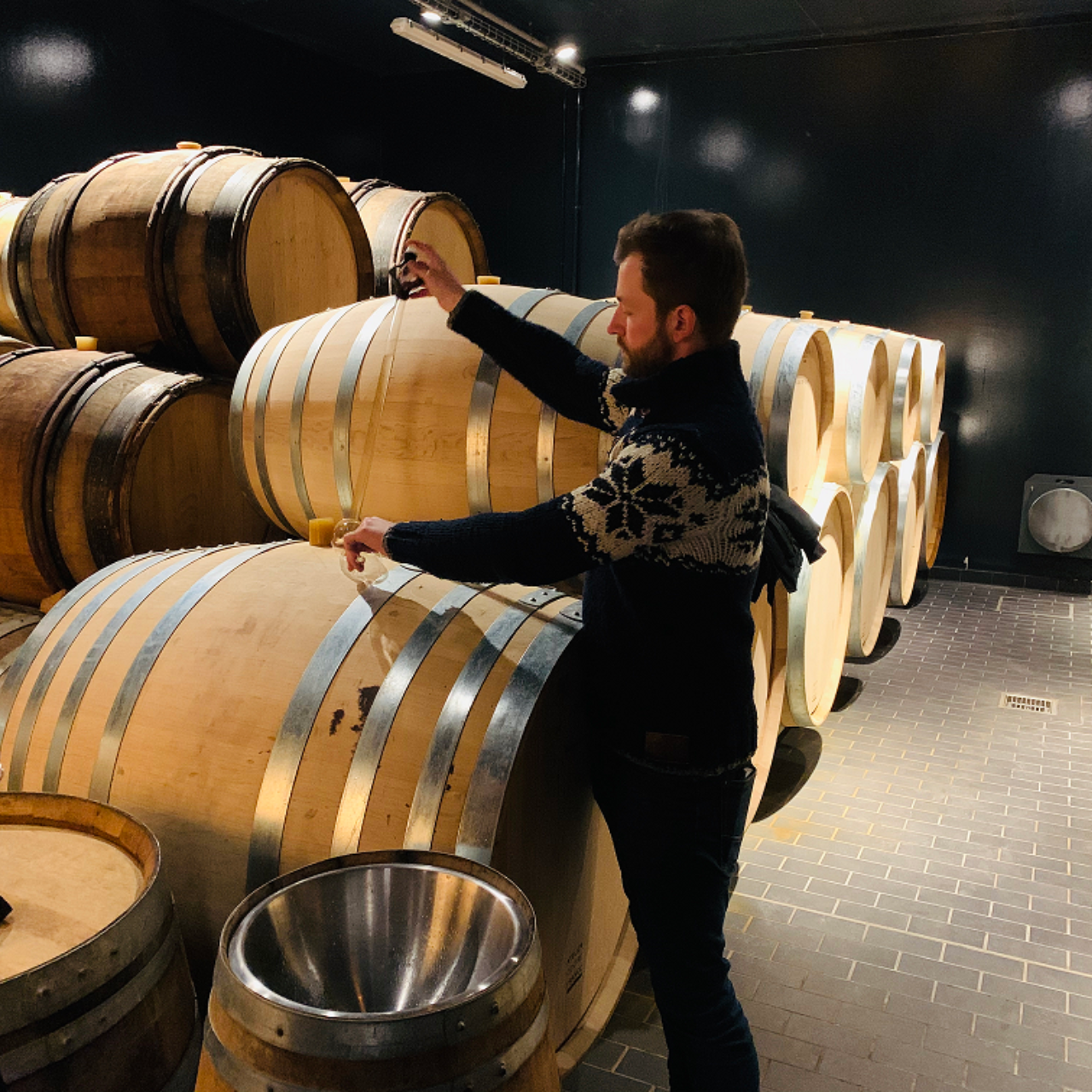
For German-speaking wine lovers, it is not always easy to grasp the immense, even existential significance that the process of Assemblage—blending—holds in the wine cultures of other parts of the world. They live within a tradition of varietal purity and, increasingly, of clearly defined provenance. However, this was not always the case here either; one need only think of terms like Gemischter Satz or Alter Satz.
Especially in the Mediterranean region but also and particularly in Champagne, further north—people have always taken a different approach and still do: many of the best wines here are “blended.” This unflattering German word exemplifies the at least indirect whiff of “dishonesty” or “impurity,” whereas in France, terms with much more positive connotations are used.
There, different wines have always been “married” in the form of a “marriage” or—as in the case of Champagne—the products of multiple grape varieties and vineyards are painstakingly blended into a complex whole as part of an assemblage. The art of assemblage is regarded there as a true art form; its result—also called an assemblage—ideally combines the best qualities of various varieties and origins.
For the sake of conceptual clarity, it should be noted in this context that the term “cuvée”, which is often used as a synonym in German, does not in the French sense refer to a blended wine, but originally denoted merely a specific batch of such a wine.
Historically, the need to blend wines stems primarily from the quest for reliability and consistent yields, as the fruits of different varieties and plots rarely ripen uniformly due to seasonal variations. However, the pursuit of maximum harmony and aromatic complexity emerged early on as well.
Undoubtedly, this “blending culture” often bore unsavory fruits in the past, justifying the use of this ugly word: For centuries, a considerable portion of the mostly more mature Rhône wine—virtually for the purpose of “doping”—disappeared into weak Burgundy vintages. Incidentally, a similarly long-standing business relationship also existed between Bordeaux and the less glamorous but climatically more favorable regions of the Southwest.
However, these negative examples cannot obscure the fact that blending wines—when done by a skilled hand—has beneficial effects in the vast majority of cases. It is also no coincidence that blending has flourished most notably in Champagne: On the one hand, historically speaking, the region lies in a climatic border zone where, in problematic vintages, not all grapes could be brought to full ripeness everywhere, so that a satisfactory result could not be achieved without blending different wines. Furthermore, the success of the first sparkling wines, starting no later than the 18th century, fueled the trend toward blending, as Champagne became—especially on the English market—one of the first major brands in wine history. And if branded products must be one thing, it is consistent and reproducible. Due to these circumstances, a culture of blending unique in the world and unmatched in its complexity developed in Champagne. Nowhere else is such a wide variety of wines from different grape varieties, origins, and, not least, vintages combined with such virtuosity.
The major champagne houses in particular, but also many artisanal winemakers, have built up an archive of reserve wines that is vast and complex to the layperson, often dating back decades and reflecting the entire region. Year after year, some of the most famous and finest champagnes are crafted through a laborious process requiring the utmost concentration and experience, blending up to three-digit numbers of base wines—some of which are stored in the smallest of containers specifically for this purpose. The growing number of single-vineyard and vintage wines in recent decades should not mislead the champagne lover into thinking that blended wines do not still make up the bulk of the region’s production and constitute, so to speak, the backbone of the commercial success of the vast majority of producers.
One could certainly argue whether a plot-by-plot representation of the respective terroir and an unvarnished reflection of the vintage in a bottle of wine are more desirable than the artful blending of dozens of base wines into a balanced, multi-layered whole. We at Champagne Characters refrain from passing judgment on this matter and point to the undisputed greatness of the best representatives of both worlds.
Video featuring Benoit Marguet during the blending process: https://youtu.be/5axltavKQow