


Am Anfang war der Ton

In the beginning was clay—at least when it comes to the material used to age wines, that is, to ferment them and let them mature. While the aging and transport of wines in wooden barrels is first reliably documented in the 1st century B.C. and stainless steel tanks are a modern invention.The use of clay vessels for wine production has been common practice for more than 7,000 years.
Back to the Roots
For some time now, they have been making a comeback in many wine regions, and especially in Champagne! The wineries, most of which operate in a very natural way, have moved away from modern winemaking methods, including the highly hygienic but, in their view, downright sterile stainless steel tank. Compared to wood, the clay vessel has the advantage of allowing for micro-oxidation without imparting its own aroma to the wine unlike wood—so the wines remain purer, and the terroir is better expressed. Clay vessels are also easier to clean and are usually more affordable. So there’s a lot to be said for this material!
The Different Vessels
The concrete egg was the first vessel to make a comeback in the biodynamic scene many years ago. It is an egg-shaped clay container that usually holds about 900 liters. Compared to traditional clay, concrete offers the advantage of better temperature control; however, these containers must be pretreated to prevent the wine’s acidity from reacting with the concrete. The egg-shaped design, on the other hand, is said to allow the yeast to slide easily down the sides and settle at the bottom, causing the wine to clarify on its own. The carbon dioxide released during fermentation ensures constant circulation of the wine, keeping it in contact with the yeast. This, in turn, results in a creamier and softer texture for the wine. Some winemakers also attribute the balanced character of wines aged in these vessels to the perfect shape of the egg, specifically its golden ratio.
For several years now, clay amphorae have found a new use. This practice originates primarily from modern-day Georgia, where they are known as quevris. These are clay vessels of various sizes that are usually buried in the ground. This ensures nearly constant temperatures for controlled fermentation and aging. The quevris, lined with beeswax to seal them, were filled with crushed grapes, including skins, seeds, and stems. A process known as whole-bunch fermentation then took place in the clay vessels not only with red grape varieties, as is still common today, but also with white grape varieties. Burying the quevris prevented excessive oxidation caused by the porous clay. Even though modern clay amphorae are often no longer buried and mash fermentation is not always the goal (it is even prohibited in Champagne, except for rosé), the advantage of the clay amphora over wood or stainless steel remains the same: flavor-neutral micro-oxidation.
Clay Egg: Champagne Marie Copinet, however, didn’t stop there; instead, she sought to combine the benefits of clay and the egg shape: she ages her Chardonnay Argilla Villonissa (“Clay from Villenauxe-la-Grande”) in egg-shaped clay amphorae. The clay used for the amphorae, in turn, comes from the Copinets’ vineyard where the Chardonnay grows, namely in Villenauxe-la-Grande on the Côte de Bar—a place known in the 19th century for its clay deposits. The mineral tension of the Chardonnay, which draws its nourishment from this soil, is further enhanced by this holistic approach to aging.
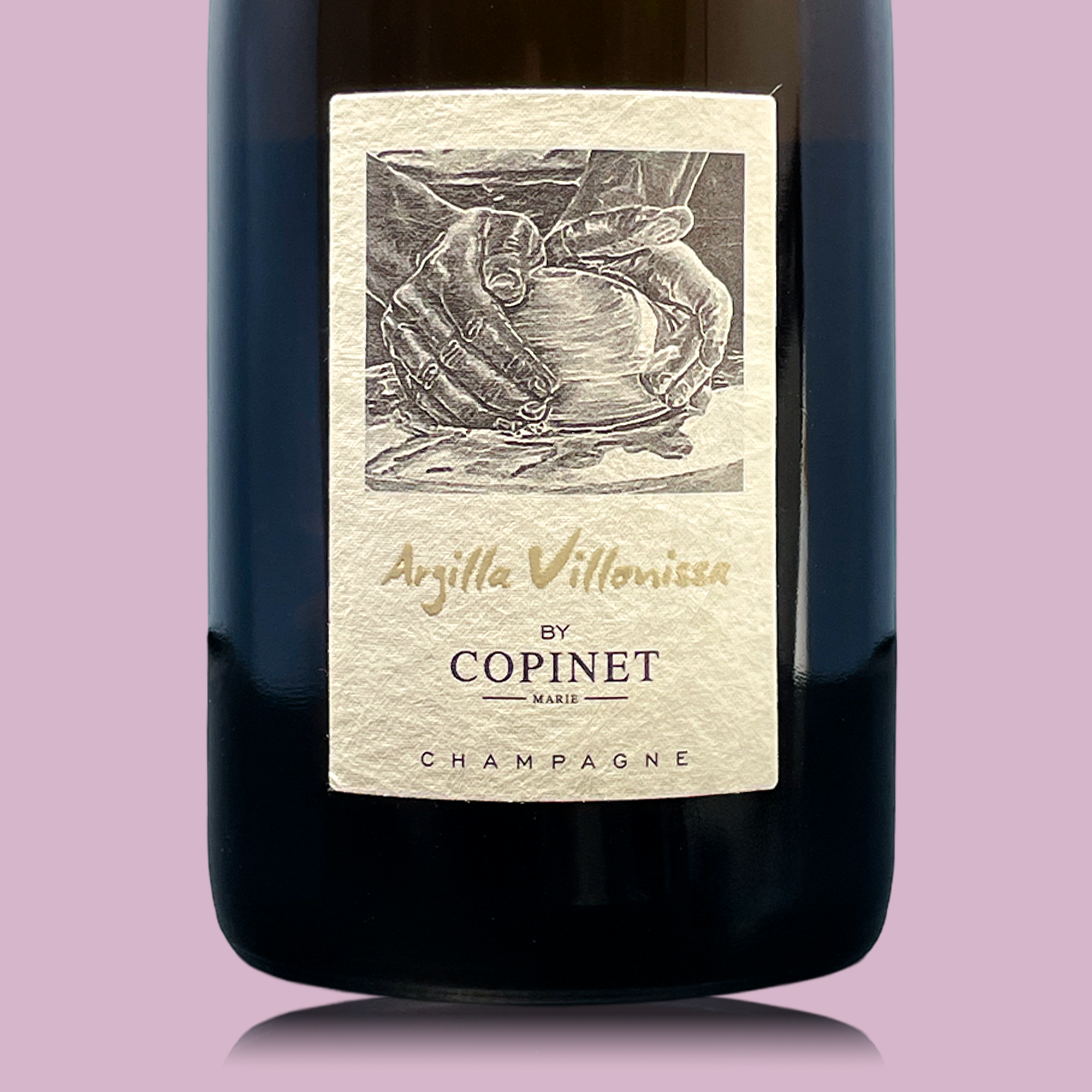
100% ChardonnayDosage 0g/lFrom Villenauxe-la-GrandeMaturation in Clayegg for 10 monthsBottle ageing: at least 12 monthsVillenauxe is known for its white clay terroir and therefore also for its pottery. For this reason, the winegrowers opted for ageing in clay.Marie-Laure: ‘Unique, rare and individual, these cuvées embody the character and spirit of their origin’Nicola OKT23: Stony character, special texture, mega strong, special, straightforward, yet aromatic, does something with you, benefits from early opening.David OKT23: Both the presentation (decanted in clay - based on the clay eggs for ageing and the terroir) and the champagne are very strong in character! lots of expression, great mouthfeel, mega tension, great minerality and super ‘salty’ finish that leaves a lasting impression
Content: 0.75 Liter (€94.67 / 1 Liter)